Created by, and for youth. Storytelling, budgets, grants, donor meetings, reporting, and templates you can copy.
The gap between youth-led environmental action and access to funding is still huge.
Every year, through The Iris Prize, we hear from thousands of young leaders working on climate and nature solutions rooted in their communities. Many are thoughtful, ambitious, and ready to grow – but only a small number receive funding. The challenge is rarely a lack of ideas or commitment. More often, it’s a fundraising system that is difficult to navigate without experience, networks, or insider knowledge.
The Youth Funding Toolkit was created in response to that reality. This is a free, open-access resource co-created with youth-led organisations and project leaders across our wider ecosystem. It draws on real experiences of fundraising as a young leader – what works, what doesn’t, and what people often have to learn by trial and error. Inside, you’ll find practical guidance to help make fundraising feel clearer and more manageable – from shaping your story and building budgets to understanding funder fit and preparing for donor conversations.
A toolkit alone won’t change funding systems overnight. But we hope this one helps more young teams step into those systems with confidence, make informed decisions, and find pathways that work for them.
The toolkit is available in English, Spanish, Portuguese and Swahili.
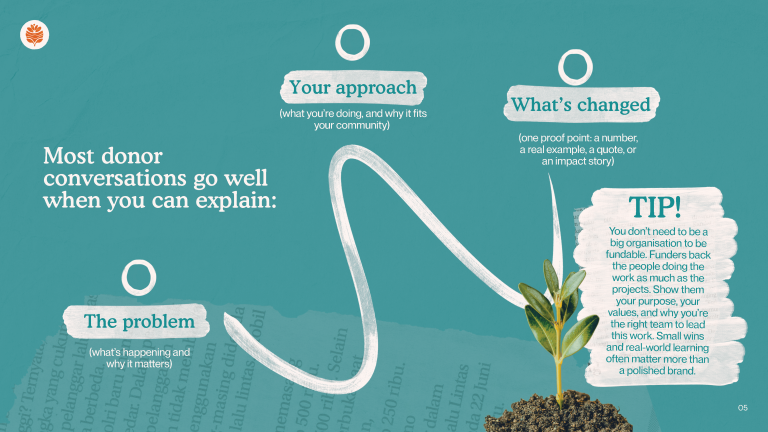
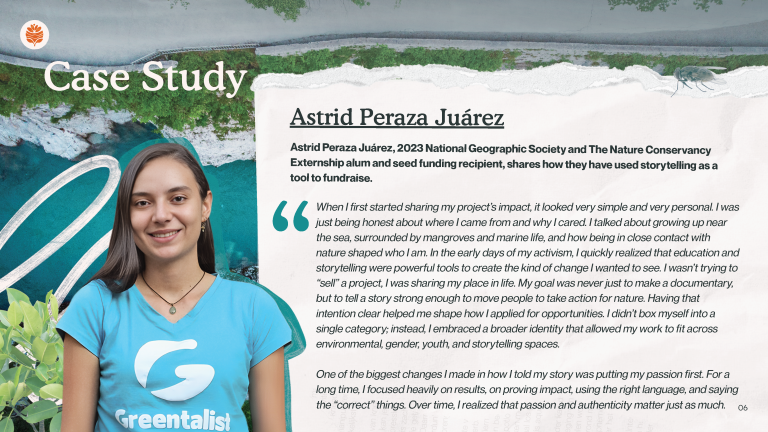
We’re piloting this toolkit, which was co-created with youth-led organisations and project leaders across our wider community. If you use it, we’d love a quick note on what was useful (and what was missing).
It only takes 2 minutes.
If you’re at an early stage and don’t have much evidence of impact yet, spend some time answering a few key questions to frame your project clearly. Why will this solution work? What problem is it solving? How will you know if it’s making a difference?
Be clear about what success would look like after six months or a year, and how you plan to measure it. Funders know early-stage projects won’t have years of results behind them. What they want to see is a solid plan and a team that’s the right group to make it happen.
At this stage, credibility comes less from past impact and more from showing you’ve done your homework and can deliver what you’re promising.
Big words like “climate justice” can mean many different things depending on where you are. What matters is being clear on what it means in your context, and why you’re the one doing this work. That’s usually what makes something stand out.
Yes, the space can be competitive, but this is especially true for things that feel generic or that have been done many times before. When a proposal is too broad, it just blends in.
The proposals that stay with a funder are the ones that feel specific. You can see the place, the people, and the reason behind it. Innovation doesn’t have to mean something completely new. Sometimes it’s just a different way of doing things, or working with a community in a way that makes sense for them. Youth-led work is usually innovative by nature, so make sure funders can see it.
Also keep in mind, not every grant is for everyone, either. Most funders are looking for something specific: a region, a group of people, a type of work. Choosing the right opportunities matters as much as writing well. When your work clearly fits what a funder is already trying to support, your chances are naturally higher.
The most valuable experience is the one that responds to the needs of the project. Funders aren’t necessarily looking for the longest CV or the most impressive degree. They want to know that you understand the problem and are well placed to solve it.
Plenty of successful fundraisers never had a formal degree. What mattered instead was a clear vision of what they wanted to achieve, and the ability to explain, fully and honestly, why their lived experience and community knowledge made them the right people to do that work.
Financial resources are needed to expand impact. A project should speak for itself, and the budget should be a tool that supports what it’s trying to achieve.
To justify it, make sure costs clearly reflect the activities and how the work will be delivered. It should be easy to understand why each cost is there and how it contributes to the project.
Transparency comes from being clear and realistic. Don’t overestimate or underestimate, and make sure the numbers align with what’s described in the proposal. It also means having accountability systems in place, so if a funder asks for a report on how money was used, there’s a way to track costs and show where the resources went.
This is one of the biggest mindset shifts for youth-led organisations. Time has value, and if the work is essential to delivering the project, then salaries are a project cost — just like materials, travel, or equipment.
Don’t apologise for including a salary or stipend in the budget. Instead, explain what the role will involve and how much time it requires. Funders are investing in the people who make projects happen, not just in activities on paper.
At the same time, be reasonable and transparent. Budget for the amount of work that will actually happen, explain the role clearly, and make sure compensation is proportional to the project. A sustainable organisation is far more impactful than one that relies entirely on unpaid labour.
Persuading donors to fund your work isn’t necessarily hard, but it’s always a little challenging, because deep down you know you’re there to ask for something. Believing in the work and respecting the people carrying it out matters, and that should come through in how you show up.
Treating donors as people, listening actively, and building a genuine connection before asking for anything changes the dynamic. It’s not just about the funding. It’s about whether the funder understands and believes in the work.
It helps to see it this way: if a funder supports the work, it isn’t them giving something away. It’s a partnership on something the world genuinely needs, one that can benefit others too. Framing the work so funders can connect with it and believe in it is part of the job.
Yes, unless the funder clearly states during the application process that they can’t provide individual feedback due to team capacity. In that case, respect their policy.
Otherwise, it’s worth reaching out every time. Send a short, kind email thanking them for considering the proposal, and ask if they could share any feedback to help prepare a stronger application next time.
As often as it makes sense. If a funder isn’t asking for updates between reports, reaching out once or twice during the reporting period is a good rhythm.
Keep it simple. A short email sharing one or two key achievements, a quick story from the field, or an unexpected learning goes a long way. Include a couple of good photos if you have them. It doesn’t need to be a long report.
Sign up below to stay updated and receive updates from us.