At The Iris Project, this is one of the questions we keep coming back to. We see young environmental leaders building effective local solutions, but still struggling to access the flexible, long-term funding they need to sustain and grow their work.
It is easy to describe this as a funding gap. And of course, it is. There is still far too little money reaching youth-led climate and nature work, especially the informal, early-stage, community-rooted work that often sits outside established NGO networks.
I’ve recently started the Mountaintop Social Impact Executive Fellowship, and our first week focused on systems thinking, drawing on the work of Donella Meadows and others. Systems thinking asks us to look beyond individual events or decisions, and pay attention to the deeper patterns, structures, incentives and assumptions that keep producing the same outcomes over time.
One exercise asked us to apply this to a challenge from our own work: to look beneath the visible problem and ask what might be holding it in place.
So I chose the challenge my team and I are trying to understand:
Why are so many young environmental leaders building effective local solutions, but still unable to access the flexible, long-term funding they need to sustain and grow their work?
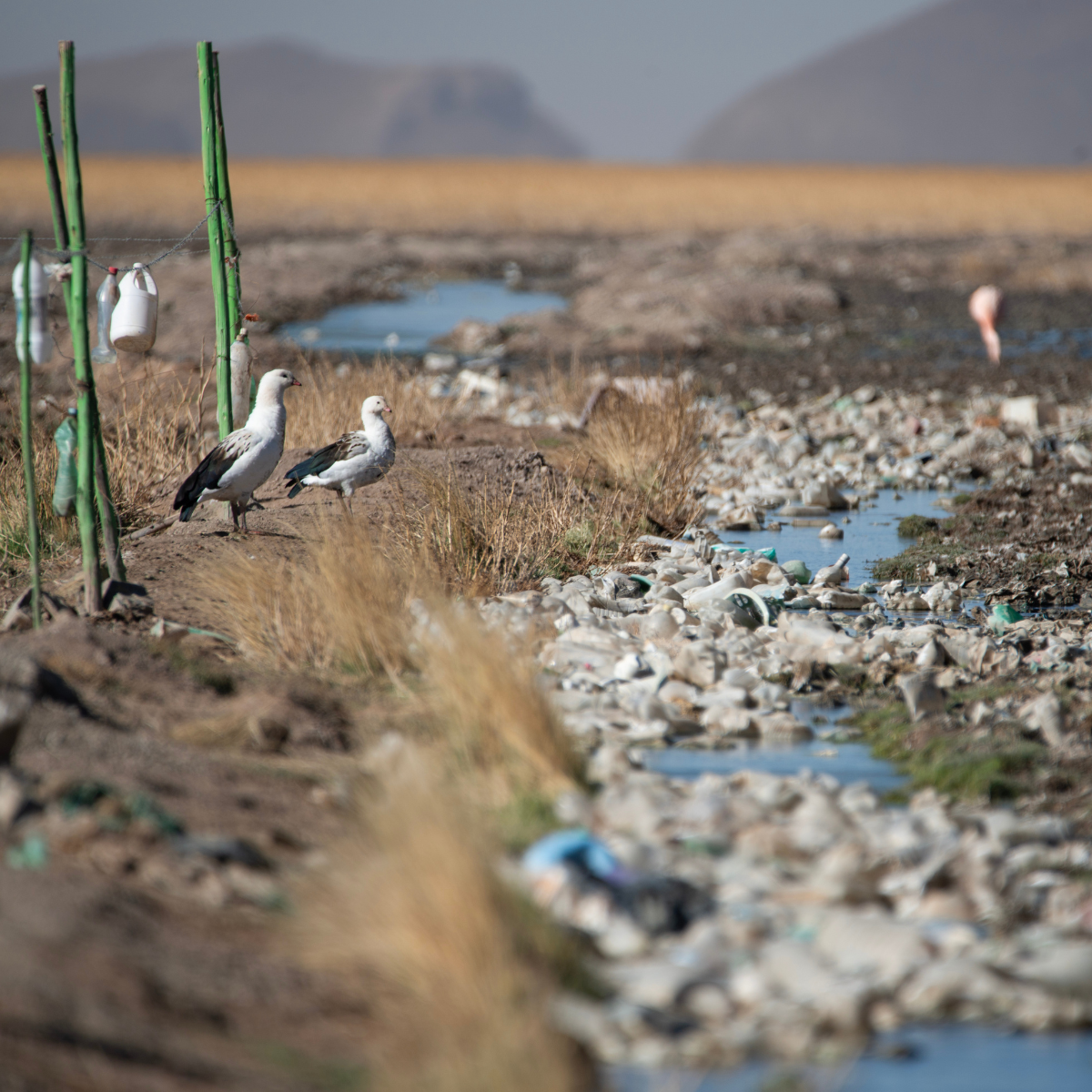
Lake Uru Uru, Bolivia
Each year, we hear from incredible young leaders protecting forests, restoring wetlands, reducing waste, defending ecosystems, growing food, educating communities, and responding to environmental harm where they live. Many are doing this with very limited resources. Most are doing it as volunteers. Some are using their own savings, borrowing equipment, relying on family support, or fitting the work around school, university and care responsibilities. Too often, the systems around them are not designed to meet them where they are.
A few weeks ago, we explored a version of this at the Marmalade Festival in the UK. In a session with Global Fund for Children, we gave each table a different funder persona to embody – from government funders and institutional philanthropy to intermediaries and larger grantmaking organisations – and asked them to choose one of three youth-led environmental projects to fund.
What stood out was that, despite the different roles they were asked to play, almost every table started in the same place: risk.
Could they fund an individual? Was the group formally registered? What would their board say? Would this meet their eligibility criteria? Could they justify it internally? Would the same work feel more fundable if it sat under a larger institution?
These were not unreasonable questions. Funders do have real constraints. Legal structures, governance requirements, due diligence processes, board expectations and reputational concerns all shape what funding institutions feel able to do.
But what stood out was how quickly those constraints narrowed the conversation.
When the question was “Can we fund this?”, people often reached the limits of their systems quickly.
When the question became “what would need to change for us to fund this well?”, the conversation opened up.
People started to identify possible routes through: working with trusted intermediaries, using fiscal hosts, paying young leaders as consultants, adapting eligibility criteria, changing what evidence is required at different stages, or recognising where internal rules were being treated as fixed when they may actually have room to be more flexible.
That shift felt important. Systems thinking has helped me begin to understand why.
One of the feedback loops I explored through the systems thinking exercise looked like this:
When youth-led work is perceived as risky, flexible long-term funding decreases.
When flexible long-term funding decreases, young leaders have less capacity to strengthen their organisations, gather evidence, build systems, and share their impact.
When there is less visible evidence of organisational strength and impact, youth-led work continues to be perceived as risky.
This loop feels familiar. It means that young people are often asked to prove they are “fundable” before they have access to the kind of support that would help them build the systems, evidence and stability funders are looking for.
A lack of formal registration becomes a reason not to fund. A short track record becomes a reason not to fund. Limited reporting systems become a reason not to fund. Informal governance becomes a reason not to fund.
But these are often not signs that the work lacks value or potential. They are often signs that young leaders are doing environmental work without the infrastructure that more established organisations have had years, and often significant funding, to build.

Santa Catarina River, Mexico
I’m not saying that funders should ignore risk. We just need to be more honest about where risk sits, who is being asked to carry it, and how funding systems can either reduce or increase it.
At the moment, young environmental leaders are carrying a huge amount of risk themselves. They are giving their time for free. They are holding relationships in their communities. They are responding to environmental damage that affects their own lives and futures. They are navigating safety concerns, financial instability, and the pressure to prove their work is credible to institutions that were often not designed with them in mind.
Meanwhile, funders often have more power, more protection, more flexibility, and more room to absorb uncertainty. Yet the burden of becoming “less risky” is still placed mainly on young people.
This is where the systems question becomes more useful than the funding question alone.
Instead of only asking:
How do we get more funding to young environmental leaders?
We also need to ask:
What needs to change around young environmental leaders so that funding can reach them in ways that are safe, flexible and useful?
That might mean changing eligibility criteria. It might mean funding through intermediaries who already have relationships with youth-led groups. It might mean supporting fiscal hosting, safeguarding, financial management, wellbeing, mentoring, and storytelling alongside grants. It might mean accepting different kinds of evidence at different stages of a project’s development. It might mean involving young people directly in funding decisions.
And it definitely means funders looking at their own systems, not just young people’s applications.

Sarangani Bay, The Philippines
At The Iris Project, this is the space we are trying to work in. The Iris Prize is one route for getting flexible funding to young environmental leaders earlier. But the grant is only one part of the work. The wider question is how we build the trust, relationships, support structures and evidence that allow youth-led work to survive, grow and be taken seriously by the wider funding ecosystem.
We do not have all the answers. But systems thinking is a useful reminder that if the same pattern keeps repeating, we need to look beyond the visible problem.
Youth-led environmental work is not inherently too risky to fund.
The greater risk may be continuing to underfund it, while expecting young people to carry the future of climate and nature work without the resources, trust and long-term support they need.
So, for funders interested in youth-led climate and nature work, the question I am sitting with is this: What would need to change in your own systems to make it easier to fund young environmental leaders with more flexibility and trust?